A new algorithmic model developed by the Bioeconomy Science Institute is transforming weed hazard assessment, bringing speed, scale, and scientific rigour to biosecurity, and growing international interest.

The Bioeconomy Science Institute is redefining how New Zealand tackles one of its most persistent environmental challenges: invasive weeds. Long recognised as a major driver of biodiversity loss and agricultural damage, weeds cost the global economy more than $163 billion annually. In New Zealand, they’ve contributed to the decline of nearly a third of threatened plant species and are estimated to cost the pastoral, arable and forestry sectors a combined $2.2 billion annually in lost production value.

Traditional weed risk assessments (WRAs) aim to predict which plants might become invasive before they spread, but these methods are slow, costly, and often rely on incomplete data. That’s where the Institute’s new model comes in which uses a rapid, algorithmic approach powered by big data and artificial intelligence.

Unlike conventional WRAs, which can take up to 24 hours per species and require lengthy questionnaires, CPG modelling is a rapid, algorithm-driven method for assessing weed hazard by combining climatic suitability, scientific publication frequency, and global occurrence data to predict a species’ invasive potential and produce an objective hazard score. AI technology analyses tens of thousands of scientific abstracts enabling fast, reproducible, and scalable assessments.

Validation tests for New Zealand and California showed strong alignment between CPG scores with (88% accuracy) and expert classifications of weed risk. High-hazard species were consistently identified, while uncertainty was greatest for low-ranking species with limited data. Researchers emphasise that CPG is a first-cut screening tool, ideal for early intervention planning and horizon scanning, but not a substitute for full risk assessments.

The model has been applied by the Bioeconomy Science Institute scientists to the entire exotic flora of New Zealand [more than 20,000 species] under both current and future climate scenarios. This wide reach will help regional and national regulators identify “sleeper weeds” which are species that seem benign today but could become invasive tomorrow.
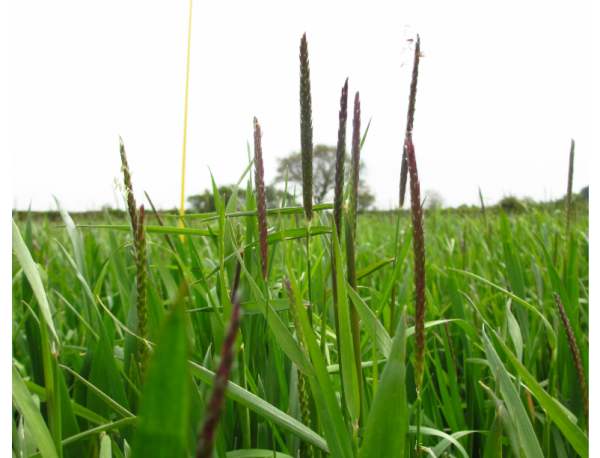
 

Black grass (pictured above) is a serious invasive weed threat to winter crops and has been identified as a threat in the Canterbury region.
 

Canterbury leads the way

Environment Canterbury has been an early adopter of the CPG model, accessing its results for Canterbury’s lowland and highland subregions via an updatable e-book. Biosecurity advisor Dr Morgan Shields says the tool is already proving its worth. 

“It assesses weeds in a fraction of the time of other models,” Shields explains. “One of the beauties of the model is that it’s objective. Battling weeds is a long-term game measured in decades. The risk is we miss emerging threats and default to the obvious ones. The model helps us avoid that possibility.”

Shields says working with the Bioeconomy Science Institute was a collaborative process. 

“The team were really receptive to our ideas and what we needed it to do, so we were hands-on in the design and development. It’s creating a fair bit of interest from colleagues at other regional councils too.”

When applied to the Canterbury lowlands, the model flagged three species with very high hazard ranking under current and future climate scenarios: 

- Tree of Heaven (Ailanthus altissima)

- Himalayan balsam (Impatiens glandulifera)

- Rum cherry (Prunus serotina) 

These rankings don’t automatically mean regional-scale management is justified - a full risk assessment is still needed to weigh potential impacts, costs, and feasibility. But the model helps identify which species deserve closer scrutiny before they become widespread.

One species that stands out nationally is blackgrass (Alopecurus myosuroides), a herbicide-resistant weed that devastates cereal crops in Europe. While small populations have been successfully eradicated in Canterbury so far, experts warn that if blackgrass were to establish and spread here, it could be catastrophic for arable farming. The model’s ability to flag such sleeper weeds early is a major advantage.

As Shields puts it: “This is about staying ahead of the curve. Weeds don’t wait, and neither can we.”

The basic model was conceived in 2021 by former Bioeconomy Science Institute principal scientist, Dr Graeme Bourdôt, who is now a Lincoln University Honorary Professor, and Institute scientist Dr Shona Lamoureaux as part of a 30-species project funded by Environment Canterbury. “Using conventional trait-based WRA models for so many species was impossible within the project’s budget,” explains Lamoureaux, “so we needed a new approach”.

“Weediness elsewhere, the concept underpinning the CPG model, has long been recognised as the best predictor of weediness, and is often one of the ‘yes or no’ components to the conventional WRA questionnaire model.  Now the algorithmic version has gone viral. It is now being applied to other types of exotic pest organisms including insect pests and animal parasites.”

Dr Craig Phillips, the Bioeconomy Science Institute scientist who developed the model’s climate suitability component said the model’s simple generic basis makes it applicable beyond plants. His colleague, Dr Chris Buddenhagen, who developed the AI-assisted process for tracking down and counting weed-related scientific publications said: “In its original non-algorithmic form, the model enabled more rapid and cost-effective assessment of weediness than traditional trait-based WRA models, but the real game-changer came with its automation.”

Since the publication of their paper in 2024 in an international science journal, where the CPG model is described in detail and validated against expert opinion and traditional WRA models, there has been mounting local and international interest. “We expect this to increase as the model’s robustness, transparency, scalability, and cost-effectiveness as an early weed/pest hazard screening tool become more widely recognised,” says Bourdôt.

Dr Alasdair Noble (statistician) on the CPG model development team, who helped ensure that the model was robust, said: “The basic premise is that climate suitability (C), research effort measured as the number of papers published (P) and global spread (G)  matter, and the question was how to best combine them to quantify a species' potential to become a weed in the future.”

The science team have already had enquiries from other regional councils in New Zealand, and MPI. International interest is also growing. The team has fielded inquiries from the Falkland Islands and China about how they might benefit from the model and potentially collaborating in applying it to aid biosecurity decision-making in their jurisdictions.

Related People

Our People

Get in touch with our team

Contact us

Send an email to one of our team or check out our facilities located across Aotearoa New Zealand.

Send another enquiry

Something went wrong and the form could not be submitted. Please try again later.